Budget for the cost of each shirt people wear, and the final number is almost always higher than the unit price on the order form.
Most of our apparel starts at a 12-piece minimum, many items can be ordered as a single sample, and real price breaks typically begin between 50 and 250 pieces. That band is where per-shirt pricing moves.
The first quote you receive is the start of the budget, because decoration, freight and leftover sizes all add cost after the blank is priced. A size run never distributes evenly across a crowd, and the unworn extras still count against what you spent. The figure worth planning around is the cost of each usable shirt once every one of those charges is in. Starting prices for our apparel lines sit in the first table below.
Table of Contents
- How much do bulk custom T-shirts cost per piece?
- How does the blank shirt change the price?
- Which decoration method fits my quantity and artwork?
- At what quantity does the price per shirt drop?
- How do I build an all-in budget and avoid overspending?
- What details do I send to get an accurate T-shirt quote?
- What do buyers ask about bulk T-shirt pricing?
How much do bulk custom T-shirts cost per piece?
Bulk custom T-shirts are blank shirts decorated with a logo or design and quoted per piece at a set quantity. The per-piece number is the charge for a specific blank, a specific decoration method and a specific order count. Treat it as the start of the budget. The number worth planning around is the cost of each usable shirt after decoration, freight and leftover sizes.
Below are the published starting prices for our apparel lines at each product's minimum.
Starting price per item at each product's minimum
| Product | Minimum pieces | Starting price each |
|---|---|---|
| Hanes EcoSmart T-Shirt | 12 | as low as $5.38 |
| Jerzees Ultimate Ring-Spun Unisex T-Shirt | 12 | from $5.70 |
| Sport-Tek PosiCharge Competitor Tee | 12 | as low as $7.98 |
| Adult Triblend Crew Neck T-Shirt | 12 | from $12.98 |
| Adult 9 oz Pullover Hoodie | 12 | as low as $33.98 |
Read that table as a floor, not a forecast. It shows where each item starts at its published minimum. Color, decoration method and quantity all move the number from there. A 12-piece crew with a one-color front print and a larger triblend order with full-color front and back decoration are different budgets, even if both are called custom T-shirts.
Check two things before you compare items side by side: the minimum piece count and the published price at that minimum. A lower starting price that applies only at a higher count is not cheaper if your order sits below that threshold. Then price the usable shirts you can hand out, including decoration, freight and leftover sizes.
How does the blank shirt change the price?
Start with the blank, because it's the first line of every quote.
Cotton feels soft and holds color well, while polyester and poly blends resist shrinking and dry faster, which is why performance and outdoor styles lean on them. A heavier fabric weight costs more than a lighter one, and a suspiciously low unit price usually means a thinner blank that pills, shrinks or goes sheer after a handful of washes.
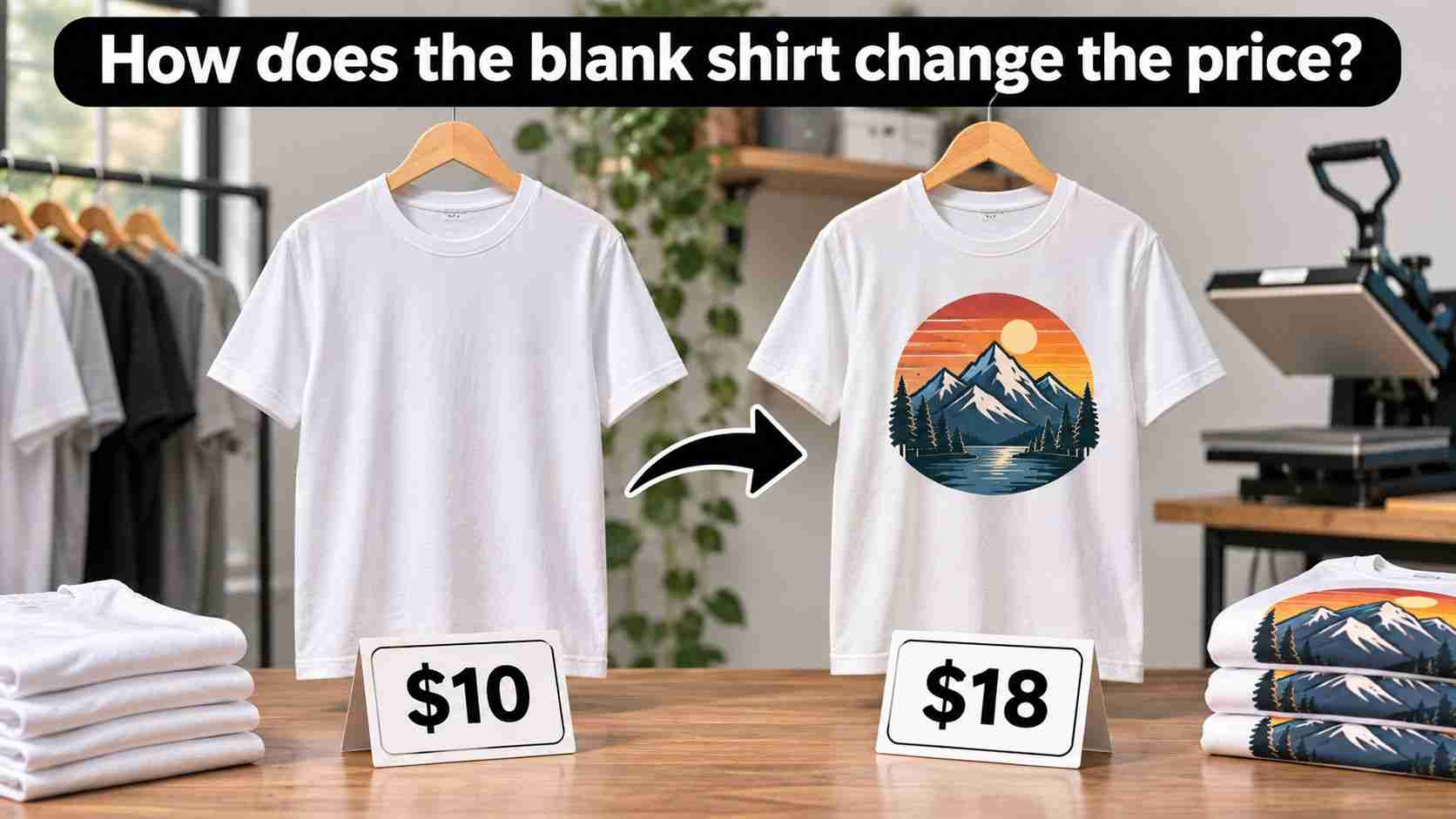
The difference shows up at the trade level too. In 2024, the average global T-shirt import price was $4.10 per unit, an increase of 9.7% from 2023, according to IndexBox's T-shirt world market overview. China's average T-shirt export price was $2.80 per unit in 2024, down 2.7% year over year, per IndexBox's China market overview. Same product category, different origin, different base cost before any decoration.
Those figures are garment-level prices. Your quote adds decoration, freight and handling on top, so the blank is one line of the total. A 9 oz pullover hoodie costs more per piece than a light tee because the blank is heavier and uses more material.
Choose the blank by the weight and fiber the job needs, then choose the decoration. If the shirt has to take a screen print cleanly, the shirts we recommend for screen printing are the ones to shortlist.
Which decoration method fits my quantity and artwork?
Match the method to the count and the artwork, not to the habit. The per-shirt quote is only the starting number. Decoration changes the cost of each usable shirt, then freight, leftover sizes and reprints decide what the order really costs.
Decoration methods compared for bulk orders
| Method | Best for | Durability | Price-break behavior | Lead time |
|---|---|---|---|---|
| Screen printing | Repeat designs at volume on cotton, canvas and non-woven materials | Excellent | Cheapest per unit at volume, with setup spread across many pieces | 7 business days for Hanes EcoSmart, 10 business days for Adult Triblend Crew Neck and Jerzees Ultimate Ring-Spun, and 1 business day for Sport-Tek PosiCharge Competitor Tee |
| Direct-to-garment printing | Small runs and full-color artwork on cotton | Good, with wash care mattering | Little setup, so price stays steadier across smaller quantities | 7 business days for cotton Pet Tank Top decoration |
| Embroidery | Logos on polos, hats, jackets and structured garments with logos | High, with strong wash performance | Per-piece cost falls more slowly as quantity rises | 7 business days for Hanes EcoSmart |
| Heat transfer | Names, numbers and small personalized runs | Moderate, depending on the press and fabric | Works well at low quantities, with price changing less with volume | 1 business day for Sport-Tek PosiCharge Competitor Tee, and 10 business days for Adult Triblend Crew Neck |
Use production time as a budget input, not a footnote. A 1 business day Sport-Tek PosiCharge Competitor Tee at $7.98 each and a 10 business day Jerzees Ultimate Ring-Spun Unisex T-Shirt at $5.70 each can serve very different deadlines. If the event date is fixed, the faster blank may be the cheaper choice after rush freight and missed-date costs are considered. For a straight comparison of decoration behavior, see screen printing vs heat transfer.
How to pick between screen printing, DTG, embroidery and heat transfer
Ask three questions of any quote: how many ink colors, how many pieces, and is the artwork photo-style?
One color, 250 pieces, simple logo: screen printing wins on cost. Full color, 24 pieces, photographic artwork: direct-to-garment. A chest crest on a polo: embroidery. Those answers work because each method charges differently for setup and artwork detail.
Screen printing is the volume method. Custom Mark offers it across 104 products, and it works on cotton, canvas and non-woven materials. Direct-to-garment printing covers small runs and full-color art on cotton with no screens, across 10 products. Embroidery suits structured garments and logos where a printed chest mark would look flat. Heat transfer fits names, numbers and personalized runs where each piece may carry different text.
I would choose the method before chasing a lower unit price. A cheap shirt with the wrong decoration method creates waste in the sizes that do not sell, the pieces that fail wear expectations and the extras needed for late signups. The useful number is the finished, usable shirt cost, not the headline blank price.
At what quantity does the price per shirt drop?
The first meaningful drop usually lands somewhere between 50 and 250 pieces, and it depends on the product.
Under the first break you pay close to the starting rate. At each break the per-shirt price steps down and stays there until the next one. Setup work is the reason: screens, artwork prep and press setup cost the same whether you run 30 shirts or 300, so dividing that fixed work across more pieces lowers every shirt in the order, not only the extra ones.
Some products count sizes and colors toward a break differently, so ask how your mix counts before you commit. Each listed price on our quantity price breaks for promotional products page is the actual price at that item's minimum order quantity, and further tiers sit below it. For a plain walkthrough of how screen charges stack up per color, these printing cost tips from Dirt Cheap Headwear explain the setup side.
Run one comparison before you approve anything. Price your count and the count just above the next break, then compare the totals. If the extra pieces add less to the total than your current higher rate costs you, order up.
How do I build an all-in budget and avoid overspending?
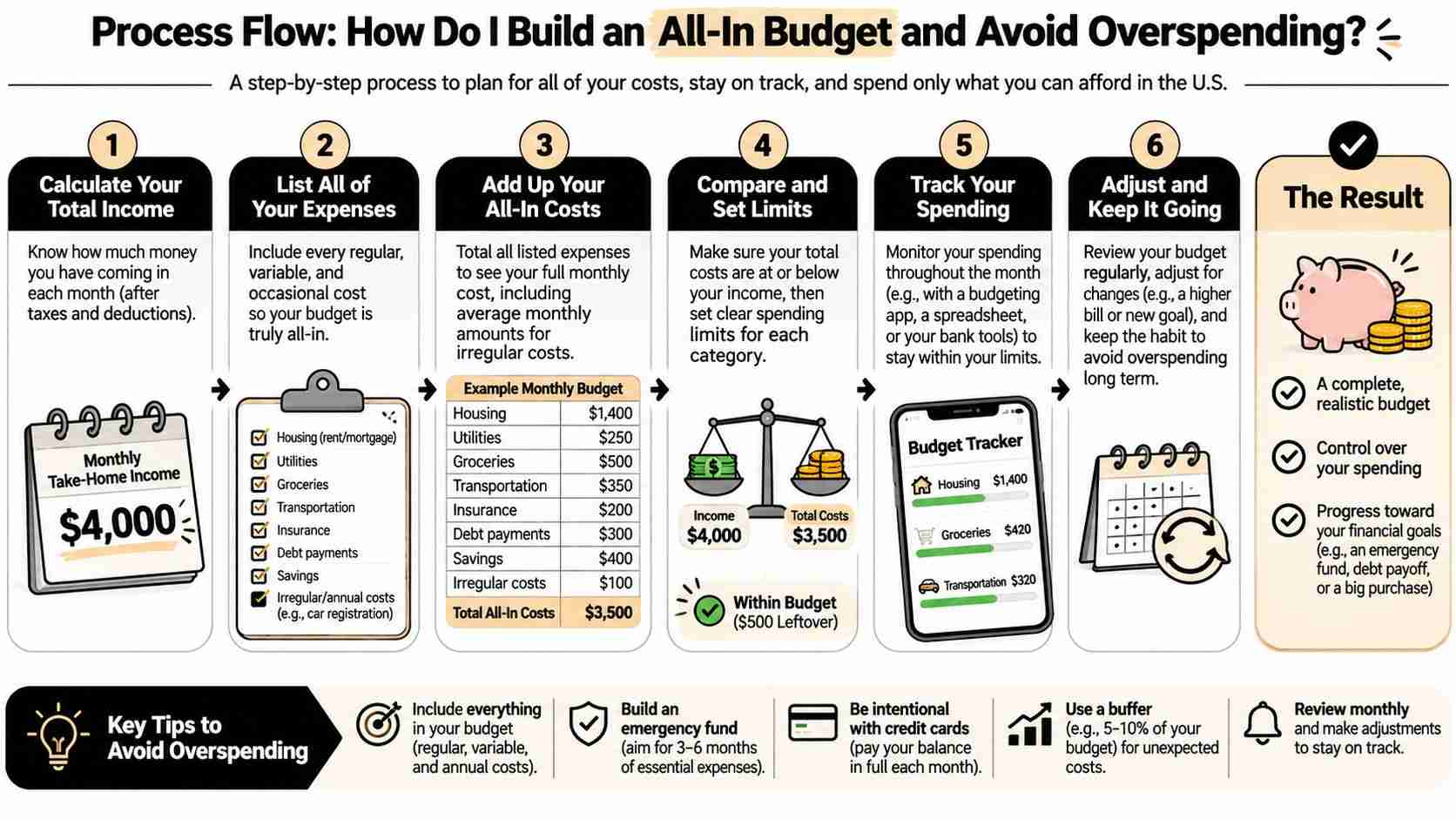
The unit price is only the start. Your real budget is the total divided by the usable shirts you can hand out.
Landed cost has moved sharply. According to CottonWorks' 2026 cotton update, the average tariff rate on apparel imports rose from 14.6% in 2024 to 30.4% by September 2025, and total sourcing cost for the average imported apparel item was up 20.5% against the 2024 average. A budget that ignores freight, duty and handling is a budget that gets revised.
- Lock the blank and fabric first. Weight and fiber set the base cost, and swapping after decoration is priced means re-quoting the job.
- Count ink colors and print locations. Each color and each location is added work. Design the logo to use the blank color as its background and you drop a color.
- Set quantity at or just above the next break, if you'll use every shirt. If you won't, you've bought storage rather than savings.
- Add any setup or decoration charge the quote lists separately. Read the lines, not only the total.
- Add freight, and price multi-site delivery separately. One shipment to one dock and five boxes to five offices are different jobs. Packaging size and weight drive that cost, the same logic that applies to cutting delivery costs on collapsible drinkware.
- Add a sizing buffer. Per CNBC's reporting on apparel pricing, apparel and footwear commonly see online return rates of 20% to 40%, and 65% of online shoppers have returned an item because it didn't fit. A short size means a small reorder at the entry rate.
- Divide the total by the shirts you'll hand out. That's the only per-shirt number that means anything.
Timing eats budgets the same way freight does. Count back from your in-hands date using the day you approve the proof, since that's when the production clock starts. If a separately billed setup line is what's inflating the quote, our guide to promotional product setup fees explains how those charges work.
The traps that blow up a T-shirt budget
- A cheap unit price that loses on total cost. Compare delivered, decorated cost per usable shirt, never the first line.
- Over-ordering past a break. Extra units only save money if they leave the building on someone's back.
- A lightweight blank on a durability job. Staff apparel and school merch get worn weekly, so pay for the fabric weight.
- A decoration method that fights the quantity. Photo-style art on 24 pieces belongs in direct-to-garment, since screens only pay off at volume.
- A proof approved without checking colors and placement. Once you approve it, that's what runs, and rework costs more than the discount saved.
Round numbers look tidy on a purchase order and terrible on a table of people. Paying the higher rate for a size curve you can staff beats a discount that leaves two boxes of mediums in a storeroom. Run the division in step 7 both ways before you decide, because the cheaper-looking order often costs more per shirt that gets worn.
What details do I send to get an accurate T-shirt quote?
A quote is only as accurate as the details behind it. Four of them carry almost all the weight, and the rest is follow-up.
- The item, named by blank and decoration method. "Crew-neck tees, screen printed" prices in one pass. "Some shirts" does not.
- The quantity, with your size breakdown. The count sets the price tier, and the size curve decides how many of those shirts get worn. A quote built on the wrong split inflates your cost per usable shirt even when the per-piece number looks fine.
- Your in-hands date. Production times differ by item, so the date tells us which products can make your deadline.
- Your artwork file, vector if it exists. Art decides the print method and the color count, both of which move the price.
Send those four and you get pricing you can build a budget on. We take orders by email or through our toll-free line, and we ship nationwide, so the delivered cost is the only number left to calculate.
If the artwork isn't ready, our shirt printing template shows what a print-ready file needs. Browse the T-shirts range to check each item's minimum and published pricing before you write the request.
What do buyers ask about bulk T-shirt pricing?
How much do custom T-shirts cost in bulk? Price depends on the blank, the decoration method, the number of colors and the quantity. The Hanes EcoSmart T-Shirt starts at $5.38 each at its 12-piece minimum, and that number moves with the tiers above it.
What is the minimum order for custom T-shirts? Minimums vary by item. Many products start at 12 pieces, and many can be ordered as a single piece for sampling, with the exact minimum shown on each product page.
How long does it take to get custom T-shirts? Production time counts from proof approval, so the clock on your order starts once you've signed off on the artwork. The quote gives the timing for your specific item and quantity, and some tees run in as few as 1 business day while others take up to 10.
Is screen printing cheaper than embroidery for bulk orders? Screen printing usually carries the lower per-unit cost on a large run, because setup spreads across the pieces. Embroidery suits logos on structured garments like polos, hats and jackets.
Does ordering more always lower the price per shirt? It lowers the price at each break, but only if you'll use the extra pieces. Shirts left in a storage room cost full price and return nothing. A run of 200 where 40 sit unworn is really a run of 160 at a higher cost per usable shirt, so count heads and sizes before you count tiers.
Can I reorder the same design later? Yes. Reorders run from the approved artwork we keep for 2 years, with no repeat setup charge.
If you're outfitting a team, a trade show or a staff gift program, we source the blank, manage the decoration and ship to one address or twenty. Browse the full range at Custom Mark to check minimums and published prices before you build the budget.
Ready to price it? Send us the shirt you’re considering and the decoration method you have in mind, the quantity, your in-hands date and your artwork file, and we’ll come back with real pricing. Start a quote.