COMPARE
DTF vs screen printing: which fits your order?
How direct-to-film transfers and classic screen printing differ in cost, color, feel and durability, and which one to pick for your shirts.
The quick answer
You have a full-color logo and only two dozen shirts to make. Choose screen printing for larger runs of the same design with a few solid colors. It has the best price per piece at volume and the most durable, soft-wearing ink. Choose DTF (direct-to-film) for small runs, full-color art, photos, gradients, and orders where every shirt is a little different, like names or numbers.
Put simply, the number of colors and the number of pieces decide it. Few colors and many shirts favor screen printing. Many colors and few shirts favor DTF.
Pick DTF if…
- Your art is full color or a photo
- You need a small or mid-size run
- Each shirt gets its own name or number
Pick screen printing if…
- Your logo has one to three colors
- You are ordering a big batch
- You want the softest, longest-lasting print
When someone sends me a full-color logo and wants a short run, I already know DTF is coming up. When it is a one-color logo on a big batch of event tees, screen printing wins every time.
Derek Capo, founder of CustomMark
Side by side
| DTF (direct-to-film) | Screen printing | |
|---|---|---|
| How it works | Design is printed on film, coated with adhesive powder, then heat pressed onto the garment | Ink is pushed through a mesh screen, one screen per color |
| Colors | Full color, gradients and photos at no extra setup | Solid spot colors, each color adds a screen |
| Best run size | Small to mid runs | Mid to large runs |
| Fabrics | Cotton, polyester, blends, nylon and more | Cotton and blends best; polyester needs special inks |
| Feel | Smooth, thin film layer that sits on top | Ink bonds into the fabric; softer on large prints |
| Price driven by | Print size and quantity | Number of colors and quantity |
| One-time setup | Little to none | Screen setup per color |
| Durability | Good with proper care; can peel or crack with age | Excellent; lasts many years of washing |
Which costs less?
It depends on quantity and colors. Screen printing has an upfront cost for every screen, but once the screens are made each extra shirt costs very little. So on a big order with a one- or two-color logo, screen printing is usually the cheapest option.
DTF has almost no setup, and the price per piece stays fairly flat whether the art has two colors or twenty. That makes DTF cheaper for small runs and for colorful designs that would need many screens. It is also the easy answer when each piece needs a different name or number. Pro tip: if you plan to reorder the same design later, mention it on your quote so we can weigh the one-time screen setup against future runs.
See our FAQ for how setup and run charges work, or request a free quote with your artwork and quantity and we will tell you which method comes out ahead.
Look and feel
DTF reproduces fine detail, gradients and photos very well, with bright color on both light and dark garments. The print sits on the surface as a thin, flexible layer. On small and mid-size designs you barely notice it. On a large solid area it can feel a bit heavier and less breathable than the shirt around it.
Screen printing gives bold, flat, consistent color and can match brand colors closely. Water-based and soft-hand inks feel almost like part of the fabric. It is the classic look for event shirts, team tees and merch.
Durability and care
A good screen print lasts for years and often outlives the shirt. A well-pressed DTF transfer also holds up to regular washing, but over a long life it is more likely to peel at the edges or crack, especially on stretchy fabric. For both, wash inside out in cold water, skip bleach and avoid high dryer heat. For uniforms washed several times a week, screen printing is the safer pick.
Best products for each method
Screen printing: custom t-shirts, hoodies and sweatshirts and tote bags in bigger quantities. Browse everything we print on our screen printing page.
Great for screen printing
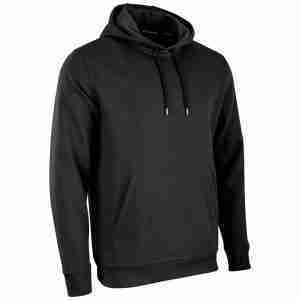 Top PickRUSH · 1 dayVictory Fleece Hoodie – Adult and YouthAs low as $30.58Min. 12View product →
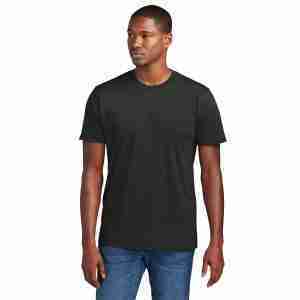 District Wash TeeAs low as $12.71Min. 12View product →
 Gildan Heavy Cotton Pocket T-ShirtAs low as $11.37Min. 12View product →
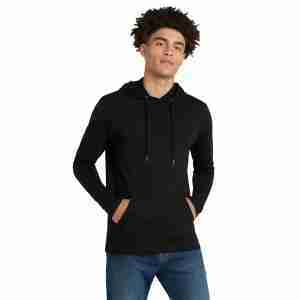 District Featherweight French Terry HoodieAs low as $27.49Min. 12View product →
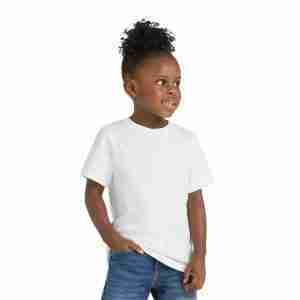
DTF and other transfers: performance shirts and blends, kids shirts in many sizes with small counts each, and full-color designs on any apparel. See items that take transfers on our heat transfer page.
Great for DTF


Minimums and turnaround
Because each color needs its own screen, screen printing makes the most sense once your quantity is high enough to spread out the setup. DTF works for much smaller runs since there are no screens to make. If you need only a few pieces, start with our low-minimum apparel picks. Production time for both is shown on each product page and starts after you approve your free proof.
Which to choose for common orders
- Event or 5K shirts, one or two colors: screen printing. Lowest cost at volume.
- Full-color logo, short run: DTF. No screens to pay for.
- Team jerseys with names and numbers: DTF or transfers for the personalization, screen printing for the shared front design.
- Polyester performance tees: often DTF. It bonds well to synthetic fabric.
- Retail merch that needs a soft feel: screen printing with soft-hand ink.
- Photo or gradient artwork: DTF. Ask us to price both if the run is large.
FAQ
What does DTF stand for?
Direct-to-film. The design is printed onto a special film, coated with an adhesive powder, cured, and then heat pressed onto the garment.
Is DTF as good as screen printing?
For small, colorful runs it is often the better choice. For large runs with simple art, screen printing still wins on price, feel and long-term durability.
Does DTF crack or peel?
A properly pressed DTF print holds up well to normal washing. Over time, high dryer heat and heavy stretching can make the edges lift or the print crack. Wash inside out on cold to get the most life out of it.
Can DTF print on polyester?
Yes. DTF works on polyester, cotton, blends and many other fabrics, which is one of its biggest advantages.
Which is better for dark shirts?
Both work well. DTF prints a white base under the color automatically. Screen printing uses a white underbase screen, which adds a color to the setup.
What file should I send?
A vector file (AI, EPS or PDF) is best for screen printing. For DTF a high-resolution PNG with a transparent background also works. Send what you have and we will tell you if it needs cleanup.
Our verdict
Screen printing wins on big runs of simple designs. DTF wins on small runs, full-color art and personalized pieces. Not sure which fits? Send us your art and quantity and we will price both, with a free proof before anything is made.
Do not pick a method first. Tell me the design, the shirt and how many you need, and I will tell you which one gives you the better shirt for the money.
Derek Capo, founder of CustomMark
More on decoration: screen printing vs embroidery · screen printing vs heat transfer · sublimation vs screen printing · cost of custom t-shirts · DTG vs DTF
